Description
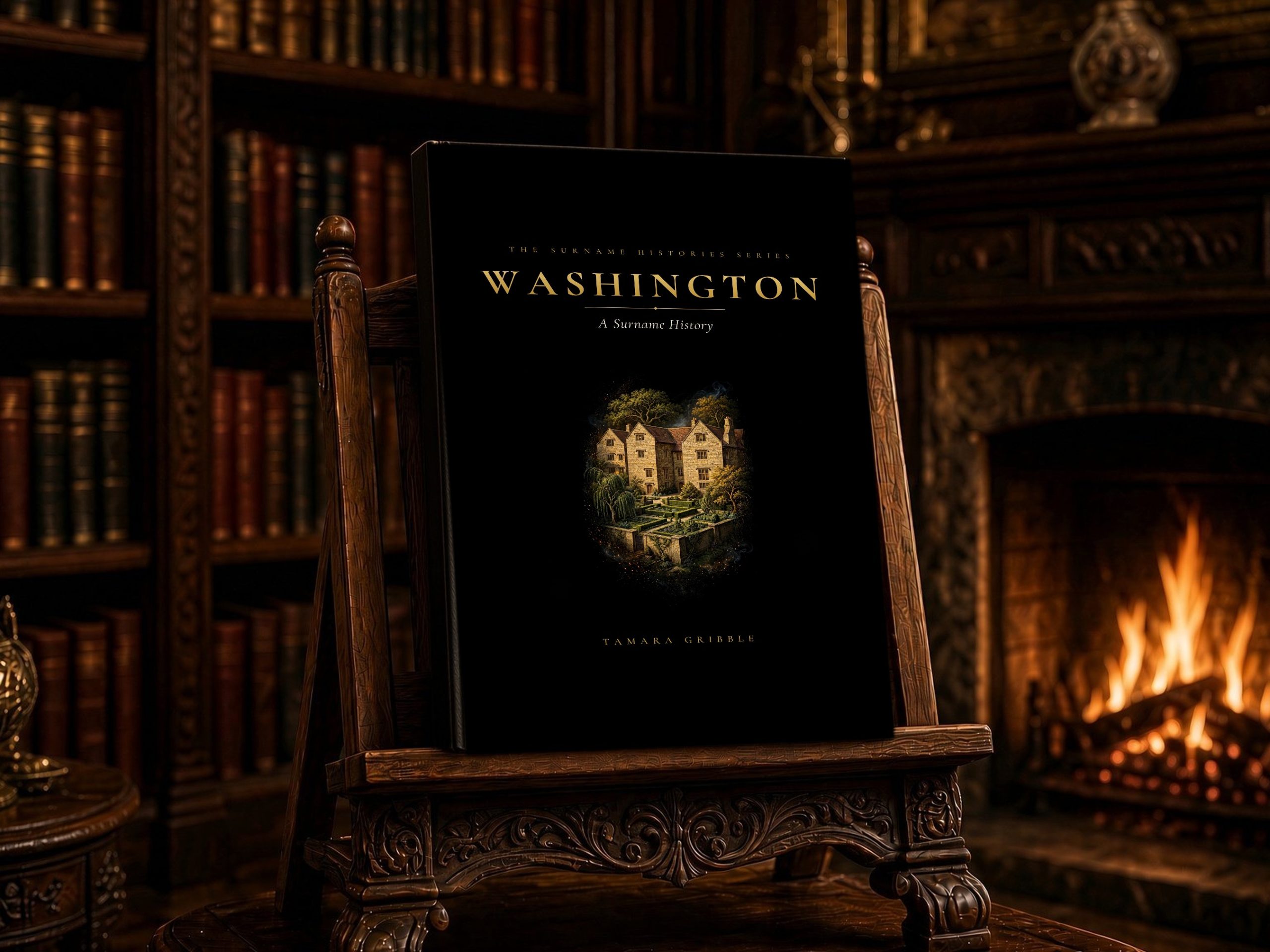
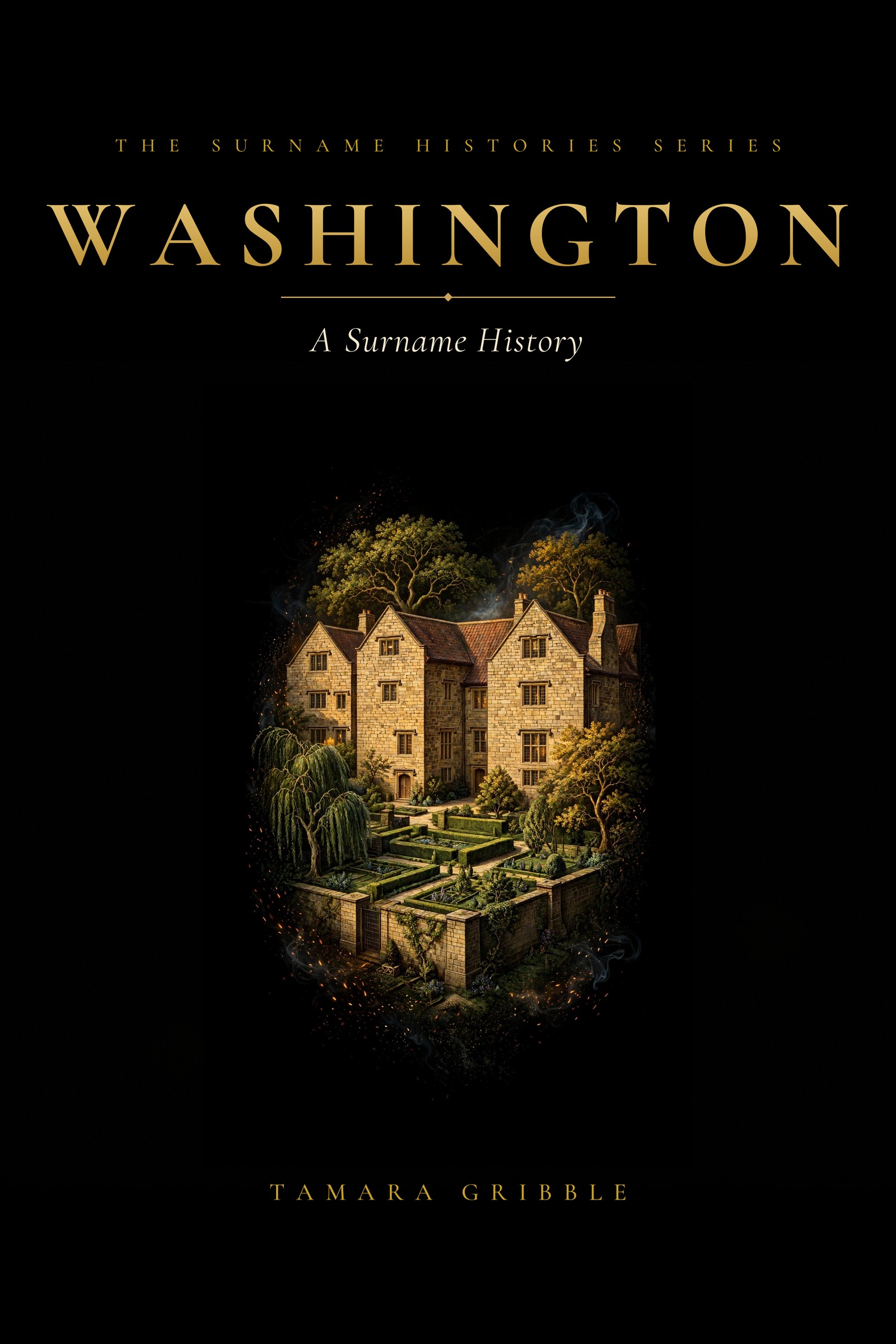
Washington began as a farmstead — “homestead of Wassa’s people,” from Hwæssa + -ing- + tūn — at Washington in County Durham, where Washington Old Hall still stands and a tenant named William de Hertburne took the place’s name for his own about 1180. His line carried it from Durham to Lancashire to Sulgrave Manor, and in 1657 the emigrant John Washington carried it to Virginia. His great-grandson George made it the most honored name in America: commander, first president — and the holder of 124 enslaved people at Mount Vernon, whose freedom his will provided for at his wife’s death. Then America remade the name. Freedpeople took the founder’s name for their own: Harry Washington carried it out of Mount Vernon’s stables to Nova Scotia and Sierra Leone, and a schoolboy named Booker took it at a roll call in West Virginia and built Tuskegee under it. The family’s genuine arms — two red bars and three red stars on silver, confirmed in 1592 — fly today as the flag of the District of Columbia; the tale that they inspired the Stars and Stripes is fenced here as the myth Mount Vernon calls it. The census closes the book verbatim: 177,386 Washingtons in 2010, 87.53 percent of them Black — the count up, the rank down: 145th in the nation, and first in its memory. Volume 85 of The Surname Histories Series — coffee-table books tracing the epic stories behind family names, from their origins to the present day.
If you’ve ever wondered where your last name comes from, this is where its story lives.


Reviews
There are no reviews yet.